


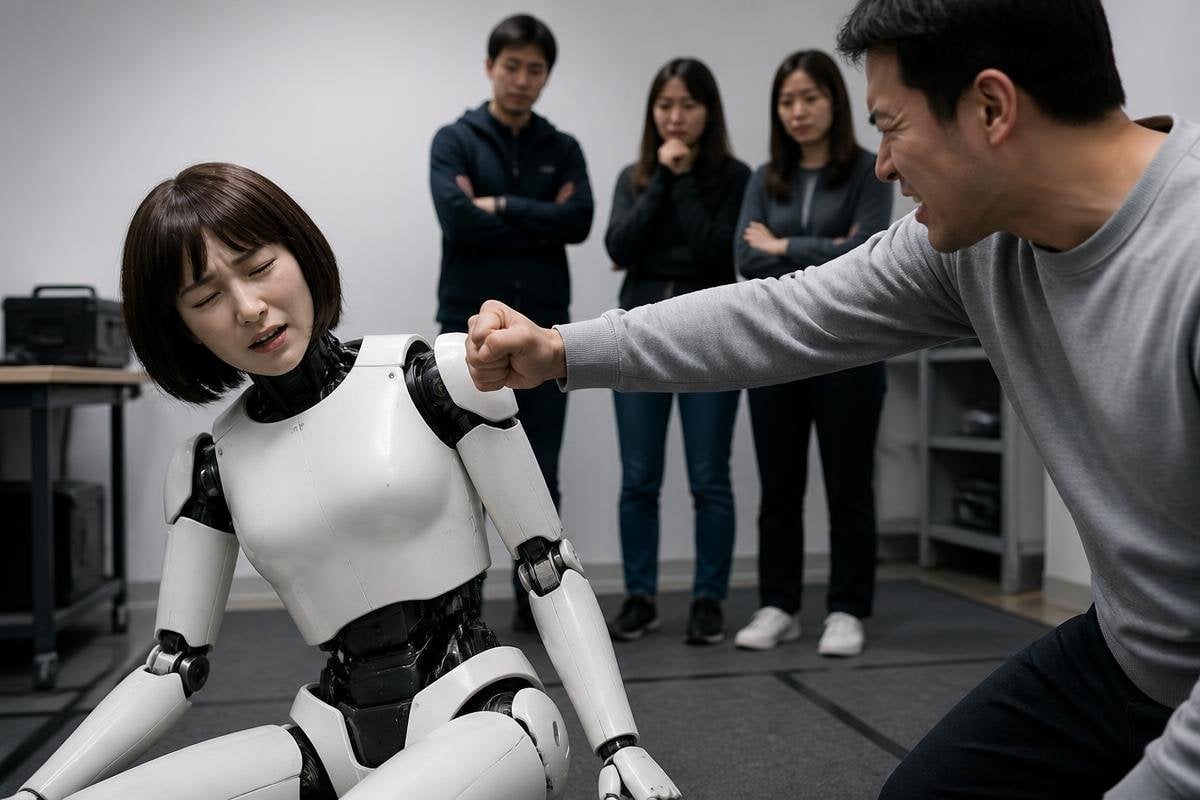
A humanlike robot can have a face, hands, a voice, and a body that reacts when someone hits it. It still has no known feelings. That makes private mistreatment a question about human conduct, while public use raises clear safety and order concerns.
Quick read
- A robot cannot suffer in the human sense we can verify.
- Harsh treatment can still affect children, workers, and bystanders.
- Rules should focus on harm to people, property, and public spaces.
The robot does not feel pain
A robot can detect force through sensors and respond with a sound or movement. That response shows programmed behavior, not proof of fear or pain. A lifelike face can make the scene feel personal, but appearance does not create a mind.
That distinction matters. People should not face punishment for hurting a robot because the robot itself suffered, unless there is evidence of a different harm. A machine can be damaged, and its owner can lose money, but those are separate claims.
The same point applies to private ownership. If an adult buys a robot and uses it alone at home, the case for banning rude words, rough commands, or staged violence is weak. The conduct may look unpleasant, yet the machine has no verified inner life to protect.
The people nearby still count
Private use changes when a child, employee, tenant, or visitor is present. A person watching someone strike a humanlike robot may read the act as a lesson about power and control, even when the robot has no feelings. That reaction belongs in the discussion.
The concern grows when a workplace asks staff to hit, insult, or scare a robot during a public demonstration. The machine may be the target, but people still share the room. A company should set limits when the scene creates fear, humiliation, or a threat of harm to a person.
A public demonstration needs a record of what the robot did, who stood nearby, and whether anyone faced a threat. Coverage at Robot24 can place those facts beside the debate, separating a machine’s recorded response from the harm a person may experience. The next section sets the rules that should apply.
What rules should cover
A useful rule should name the harm it prevents. A broad ban on “abusing robots” risks treating a machine’s appearance as proof of rights. A narrow rule can protect people and property without pretending that a robot has human needs.
Rules may reasonably cover damage to someone else’s robot, unsafe force near people, harassment aimed at a person through a robot, and use in places with posted conduct standards.
A robot used in a care home, school, shop, or public exhibit also needs rules for the humans around it. The setting matters more than the robot’s face. A test inside a locked lab has a different risk from a public display where children can watch, copy, or take part.
The robot’s owner, operator, venue, and safety plan should carry the duty to set boundaries.
The hard case: training people to hurt machines
Some teams may need to test a robot against impacts, falls, or forced movement. That work can be valid when it checks a safety limit or helps fix a design. The reason for the test should be clear, and the people involved should know what the test measures.
A staged act designed to make viewers cheer at a robot’s distress deserves more care. I’d allow private rough testing when it has a clear engineering purpose, but I’d restrict public scenes that use fear or cruelty to entertain people.
The open issue is whether repeated treatment of humanlike machines changes how people act toward one another. That claim needs careful evidence. Until it exists, policy should protect people from direct harm instead of declaring that every robot deserves human-style protection.
A practical decision guide
Use these checks before allowing a person to mistreat a humanlike robot:
- Name the purpose: Write down the test, repair, training, or performance goal.
- Check ownership: Confirm who may approve damage and who pays for repairs.
- Clear the area: Keep bystanders outside the robot’s movement and impact range.
- Protect people: Stop the activity if a person faces fear, pressure, injury, or humiliation.
- Set the audience rule: Tell visitors, students, and staff what they may watch or do.
- Record the result: Save the robot’s sensor data, visible damage, and reason for stopping.
Those checks keep the focus on real effects. A machine can look human without becoming a person, and a person can be harmed without being the robot’s target.
The best policy will permit controlled engineering tests, allow private ownership, and set firm limits where people face danger or coercion. That leaves one question for future evidence: does repeated exposure to robot abuse change human behavior in a measurable way?
