


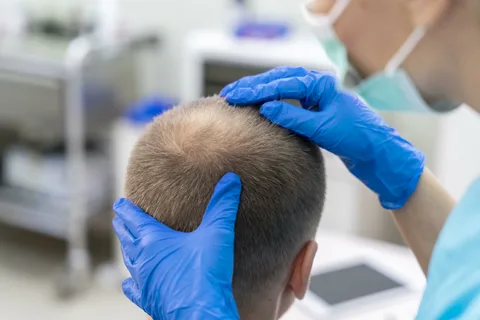
Hair restoration has advanced dramatically over the past decade. Today, procedures are safer, more natural-looking, and backed by sophisticated medical research. Understanding The Science Behind Modern Hair Transplant Techniques helps patients appreciate why results are now more predictable and effective than ever before.
Understanding Hair Growth Biology
The Hair Growth Cycle
Hair grows in three phases: anagen (growth), catagen (transition), and telogen (rest). Modern transplant methods rely on identifying healthy, actively growing follicles to ensure long-term results.
Donor Dominance Theory
This key scientific principle explains why transplanted hair continues to grow even after relocation. Follicles taken from the donor area—usually the back of the head—retain their genetic resistance to hair loss.
Modern Hair Transplant Methods
1. Follicular Unit Extraction (FUE)
FUE involves extracting individual follicular units with tiny punch tools.
- Minimal scarring
- Faster recovery
- Natural-looking density
The precision behind FUE highlights The Science Behind Modern Hair Transplant Techniques, as it relies on advanced tools and microscopic accuracy.
2. Follicular Unit Transplantation (FUT)
FUT, also known as the strip method, involves removing a small strip of scalp and dissecting it under a microscope.
- Ideal for larger graft sessions
- High follicle survival rate
- Cost-effective for many patients
Both FUT and FUE are based on biological principles that ensure transplanted follicles adapt to their new environment.
Role of Technology in Modern Procedures
Microsurgical Tools
Ultra-fine blades, punches, and forceps reduce tissue trauma, improving graft survival.
Robotic Assistance
AI-driven systems increase precision by identifying optimal follicles for extraction. These technologies illustrate how The Science Behind Modern Hair Transplant Techniques continues to evolve.
Improving Graft Survival
Hydration and Hypothermic Storage
Grafts are stored in specialized solutions to maintain cellular vitality before implantation.
Angulation and Placement
Surgeons replicate natural hair direction and density patterns to create seamless results.
Conclusion
Understanding The Science Behind Modern Hair Transplant Techniques provides valuable insight into how modern medicine, technology, and biology converge to deliver successful hair restoration. As research continues, patients can expect even more refined, effective, and natural-looking outcomes in the future.
