


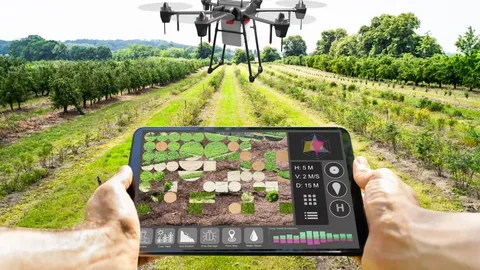
The agriculture industry is undergoing a transformation, thanks to innovations in technology that are reshaping how farmers approach crop management, livestock care, and environmental sustainability. Among the key players in this revolution are drones, sensors, and other smart technologies that are revolutionizing traditional farming practices. These technologies, collectively known as smart agriculture, are enhancing efficiency, improving yield, and making farming more sustainable.
In this article, we’ll explore how drones and sensors are driving this technological shift and why they are central to the future of farming.
The Role of Drones in Smart Agriculture
Drones have emerged as one of the most exciting tools in smart agriculture, offering farmers the ability to monitor vast amounts of land quickly and efficiently. These unmanned aerial vehicles (UAVs) provide a bird’s-eye view of farms, giving farmers the ability to collect real-time data on crop health, irrigation, and even pest infestations.
Precision Crop Monitoring
With the help of drones, farmers can assess their fields with remarkable precision. Equipped with high-resolution cameras and advanced sensors, drones can capture detailed images of crops, enabling farmers to detect issues like nutrient deficiencies, pest damage, or diseases before they become widespread. This allows for early intervention and targeted treatments, minimizing the use of pesticides and fertilizers.
Mapping and Terrain Analysis
Drones are also used for mapping large areas of farmland. By flying over crops, drones can create detailed topographical maps and 3D models of the terrain. These maps help farmers make better decisions about irrigation systems, crop rotation, and soil management, leading to more efficient use of resources and increased productivity.
Sensors: The Heart of Smart Agriculture
While drones are a valuable tool for monitoring and data collection, sensors are the backbone of smart agriculture. These devices provide continuous, real-time data on various environmental and crop health factors, offering deeper insights into soil conditions, climate, and plant growth.
Soil Sensors for Optimal Irrigation
One of the most significant advances in smart agriculture is the use of soil moisture sensors. These sensors are placed in the ground to monitor soil moisture levels at different depths. By collecting this data, farmers can better understand the needs of their crops and avoid over- or under-watering. With automated irrigation systems linked to these sensors, farmers can deliver precise amounts of water to their crops, reducing water waste and improving crop health.
Climate and Environmental Monitoring
Other types of sensors are designed to track weather conditions such as temperature, humidity, and wind speed. These sensors can provide farmers with valuable information to predict weather patterns and make informed decisions about when to plant or harvest crops. Additionally, environmental sensors monitor air quality, soil pH, and CO2 levels, helping farmers adjust their farming practices to optimize yields and protect the environment.
Livestock Management with Sensors
Beyond crops, sensors are also making a significant impact on livestock farming. Wearable sensors for animals are helping farmers monitor the health and behavior of their herds. These sensors can track vital signs such as heart rate, body temperature, and movement patterns, providing early warnings of illness or stress. This data helps farmers manage their livestock more effectively, reducing the need for antibiotics and ensuring healthier animals.
The Future of Smart Agriculture: Integration and AI
As technology continues to evolve, the future of smart agriculture lies in the integration of drones, sensors, and artificial intelligence (AI). AI-powered systems can process the massive amounts of data collected by drones and sensors, providing actionable insights and predictions. For example, AI can analyze sensor data to predict crop yields, recommend optimal planting schedules, and even identify patterns in pest outbreaks or disease.
Sustainable Farming Practices
The technologies driving smart agriculture, from drones to sensors, are not only improving efficiency but also promoting sustainability. By optimizing resource use, reducing waste, and minimizing chemical inputs, these technologies help farmers practice more sustainable farming. This leads to higher yields with less environmental impact, an essential factor in feeding a growing global population while protecting the planet.
Conclusion: The Transformative Power of Drones and Sensors in Agriculture
The world of agriculture is rapidly evolving, and drones and sensors are at the forefront of this transformation. From providing farmers with real-time insights into crop and soil health to enabling precise irrigation and livestock monitoring, these technologies are making farming smarter, more efficient, and more sustainable. As advancements in AI and data analytics continue to evolve, we can expect these tools to become even more powerful, helping farmers tackle challenges and meet the growing demands of a changing world.
