


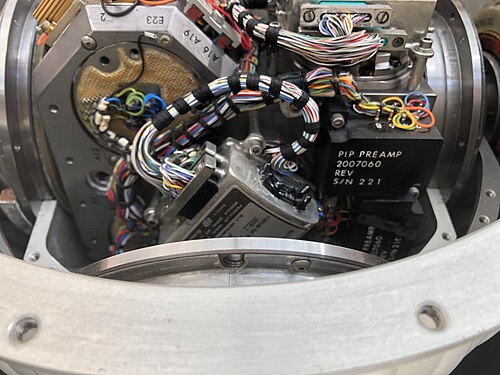
In modern aerospace, marine, automotive, and defense applications, precise navigation is essential even when GPS signals are weak or unavailable. This is where inertial navigation systems play a critical role. A Complete Guide to Inertial Navigation System Components helps you understand how these systems are built, how they function, and why each component is important for accurate positioning and motion tracking.
Introduction to Inertial Navigation Systems
An inertial navigation system (INS) is a self-contained navigation method that calculates position, velocity, and orientation using internal sensors rather than external references. It relies on measuring acceleration and angular velocity to continuously estimate movement.
A Complete Guide to Inertial Navigation System Components is essential for engineers, students, and professionals who want to understand how these systems maintain accuracy in environments where satellite signals are unavailable, such as underwater navigation or space missions.
Key Components of an Inertial Navigation System
To fully understand system performance, it is important to break down the main hardware and software elements.
1. Accelerometers
Accelerometers measure linear acceleration along one or more axes. By tracking changes in velocity over time, they help determine how fast and in what direction a system is moving.
- Detect forward, backward, and vertical movement
- Provide raw data for velocity estimation
- Must be highly sensitive and low-noise
2. Gyroscopes
Gyroscopes measure angular velocity, which indicates how fast an object is rotating around an axis.
- Track pitch, roll, and yaw
- Maintain orientation in 3D space
- Essential for stable navigation in dynamic conditions
3. Inertial Measurement Unit (IMU)
The IMU is a compact module that integrates accelerometers and gyroscopes, and sometimes magnetometers.
- Combines multiple sensors into one package
- Reduces system size and improves efficiency
- Provides raw motion data for processing
4. Navigation Processor
The navigation processor performs complex mathematical calculations to convert raw sensor data into usable navigation information.
- Uses algorithms like Kalman filtering
- Corrects drift and sensor errors
- Outputs position, velocity, and orientation
5. Power Supply Unit
A stable power source ensures uninterrupted operation of all sensors and processors.
- Maintains system reliability
- Prevents data loss during power fluctuations
- Critical for long-duration missions
How Inertial Navigation Works
To understand the system fully, A Complete Guide to Inertial Navigation System Components must also explain how the components work together.
The process begins with accelerometers and gyroscopes collecting raw motion data. This data is sent to the navigation processor, which integrates it over time. The system continuously updates position and orientation estimates using mathematical models.
However, small measurement errors can accumulate over time, leading to drift. To correct this, many systems integrate GPS or other external references when available.
Applications of Inertial Navigation Systems
INS technology is widely used across multiple industries due to its reliability and independence from external signals.
Aerospace and Aviation
Aircraft use INS for backup navigation when GPS signals fail or are unavailable.
Defense Systems
Missiles, submarines, and drones rely on INS for precise targeting and trajectory control.
Automotive Industry
Self-driving vehicles use inertial sensors to improve localization accuracy in tunnels or urban environments.
Space Exploration
Spacecraft use INS to maintain orientation and navigation in deep space missions.
Advantages and Limitations
Understanding both strengths and weaknesses is essential in A Complete Guide to Inertial Navigation System Components.
Advantages
- Works without external signals
- High-speed real-time tracking
- Resistant to jamming or interference
Limitations
- Drift over time without correction
- Requires complex calibration
- High-quality sensors can be expensive
Future of Inertial Navigation Technology
Advancements in micro-electromechanical systems (MEMS) are making inertial sensors smaller, cheaper, and more accurate. Artificial intelligence and sensor fusion techniques are also improving system reliability by combining INS data with GPS, vision systems, and radar.
As these technologies evolve, A Complete Guide to Inertial Navigation System Components becomes increasingly relevant for understanding next-generation autonomous systems.
Conclusion
Inertial navigation systems are a cornerstone of modern navigation technology. By combining accelerometers, gyroscopes, IMUs, and advanced processing units, these systems provide reliable motion tracking in environments where external signals are not available.
Ultimately, A Complete Guide to Inertial Navigation System Components highlights how each part contributes to accurate, continuous navigation, making INS technology indispensable in aerospace, defense, transportation, and beyond.
